
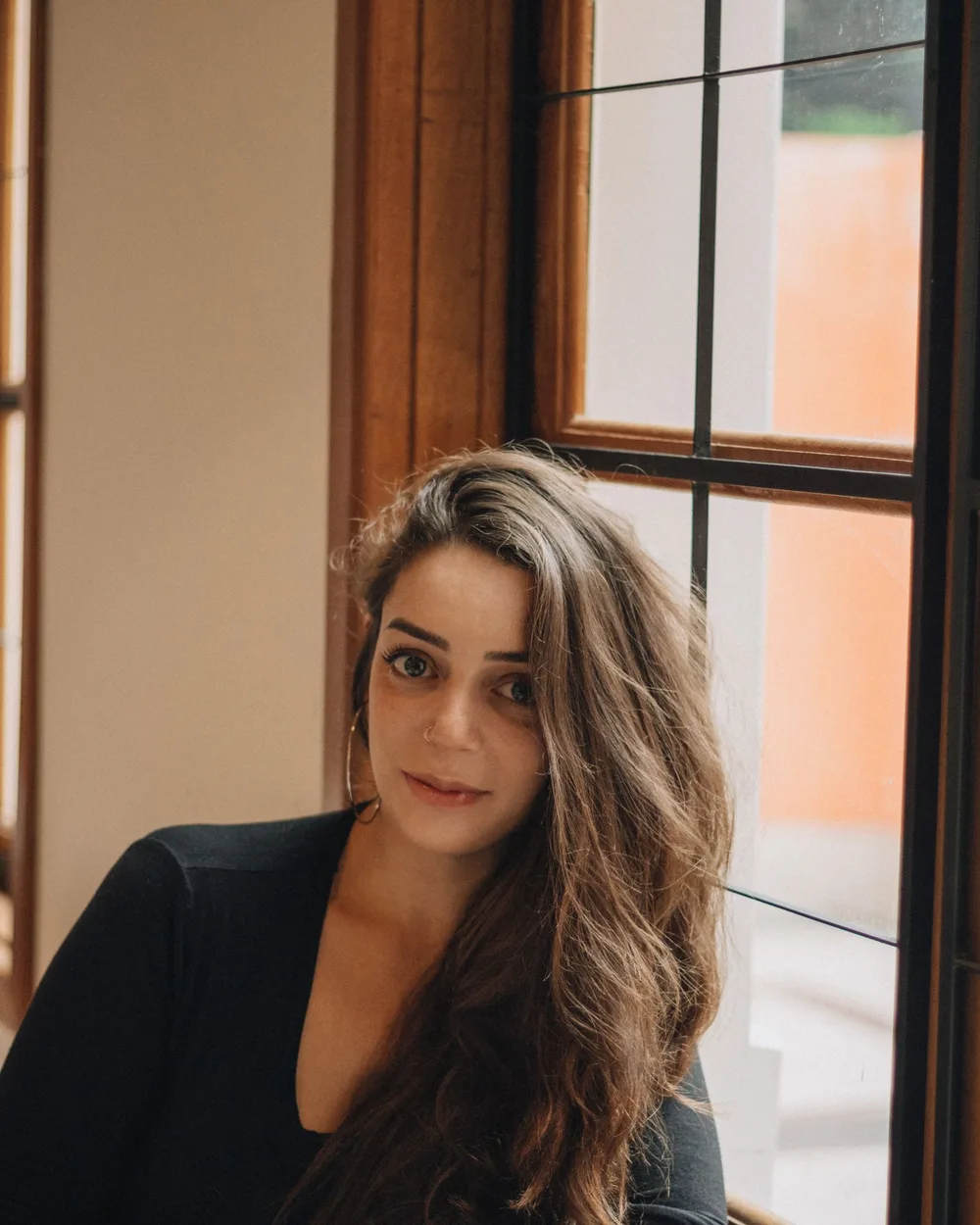
There is a moment, a year or two into taking pictures seriously, when new equipment stops helping. The camera is fine. The lens is fine. The photographs are still somehow ordinary, and the reason is nearly always the same: the light was whatever the room happened to be doing, and the frame was wherever you happened to be standing. Both are choices.
The four things light is doing
Any light is doing four things at once, and with practice you can name all four in a sentence. It has a direction — where it arrives from, relative to your subject and your camera. A quality — how abruptly it hands over to shadow. A colour, measured in kelvin but readable by eye. And a quantity, the only one your meter has an opinion about and the least interesting.
Beginners spend their attention on quantity, because the camera nags about it. The first three decide whether a photograph looks like anything. A drill worth a week: stop shooting and start narrating. Pick a face or a coffee cup and say out loud where the light comes from, how fast the shadow falls away, and what colour it is.
Direction: move yourself, not the lamp
With one obvious source — a window, a doorway, the sun — walk a slow circle around your subject and watch the face change. You are not moving the light, only changing which side of it you stand on.
- Light behind you, flat on the face. Even, forgiving and dull: the shadows that describe form hide behind the features that cast them.
- Forty-five degrees to one side and a little above. Where most portrait light lives: the nose casts a small shadow angling toward the corner of the mouth, one cheekbone catches, and the face reads as solid.
- Straight from the side. Maximum texture, maximum drama — half lit, half in shadow. Wonderful on weathered skin, less kind to a teenager.
- Behind the subject. A rim along the hair and shoulders that separates them from the background. The face goes dark unless you lift it — what a reflector is for.
- From below. Reads as strange, because almost nothing in the ordinary world lights us from underneath — useful when you want that.
A gauge while you work: find the shadow cast by the tip of the nose. If it reaches toward the corner of the mouth without touching the lip line, you are in classical portrait territory.
Hard and soft is a question of size
Hardness is not about brightness but about how large the source appears from where the subject stands. The sun is enormous and 93 million miles away, so from a face it is a pinpoint — and pinpoints make hard, sharp-edged shadows.
An overcast sky is that same sun spread across the whole dome above you: the largest source most of us will ever work under, its shadows so gradual you can barely find the edge.
This is why moving a desk lamp closer softens it. You have not changed the bulb, you have made it bigger relative to the face. Diffusion does the same: it turns a small bright thing into a large dim one.
The shadow edge is the tell. A soft source gives a gradient across two inches of cheek; a hard one gives a line you could cut paper along.
Colour, and why mixed light looks wrong
Your eye adapts to the colour of light so completely that you stop noticing it. A camera does not. A household bulb sits near 2700K and renders warm; daylight is markedly cooler; open shade under blue sky cooler still; some older tubes push green.
Shooting raw lets you set white balance afterwards, but not separate two colours of light that landed on the same face. Warm it to fix the window and the lamp goes orange; cool it to fix the lamp and the window goes blue.
So pick one and commit. Switch the lamps off and let the window be the light, or close the blinds and let the lamps be. The third option is to keep the mix, but arrange it so the warm source is visibly a lamp in the background, not an unexplained cast on a jaw. Mixed light only looks like a mistake when it looks accidental.
Five lights you already have
None of these costs anything, and together they cover most of what a beginner needs.
- Window light. Large, soft, directional and free; a north-facing window is steady all day. Distance controls everything: a face a foot from the glass falls off sharply; eight feet back it is lit far more evenly.
- Open shade. A porch, a deep doorway, the shadowed side of a building. Watch what is nearby: a lawn bounces green into a chin, brick bounces warm — easier to avoid than remove.
- Overcast. An enormous soft source directly overhead. Its weakness is direction: from above it leaves eye sockets in shadow. Lift the chin, or step the subject under an overhang that lets horizontal light in.
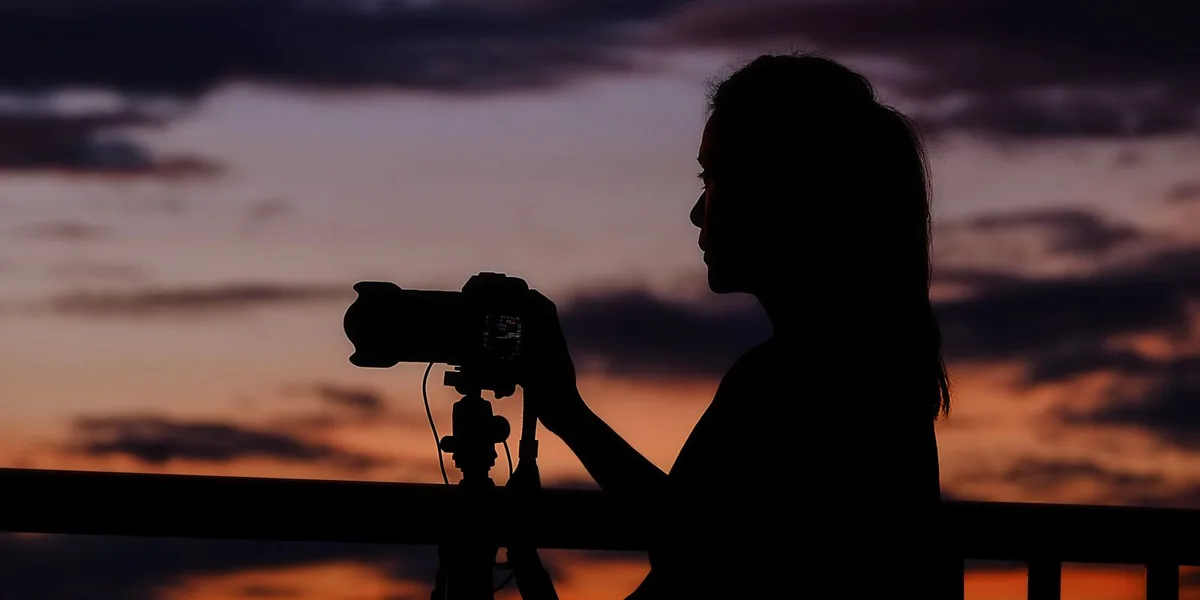
- Backlight. The sun behind the subject gives a rim along the hair and a face your meter will want to underexpose. Meter for the face and let the background go bright — late in the day, the most reliable light there is.
- One reflector, or one flash. A folding disc or white board just out of frame on the shadow side lifts the shadows so they keep detail. It is not a second light: a second catchlight or nose shadow means you have gone too far. One off-camera flash does the same — small umbrella, above eye level to one side, power down until it looks like a window.
Building a frame that holds
Composition is the decision about what a viewer's eye does in the second and a half it spends on the photograph. There are only a handful of levers.
Where the subject sits. The thirds grid is training wheels; the better question is what the subject is looking at or walking into, and whether you left room for it. A nose against the frame edge feels trapped. Centre deliberately, for symmetry or a direct gaze.
Leading lines. A line is only leading if it arrives somewhere. A kerb that runs out of the frame without reaching the subject is just a line.
Negative space. Emptiness is not wasted area; it is what makes a subject read as small, isolated or calm. Resist the instinct to fill the frame at least once per situation.
Layering. Something in front and something behind — shoot through a doorway, past a shoulder, under a branch. Depth costs a step sideways.
Simplify. Name the one thing the picture is about, then read the four edges and ask what else got in. Beginners check the face and miss the exit sign behind the ear. Check the background first.
Focal length and what it does to a face
A 24mm or 35mm lens is an environmental tool: it puts the person in their room, their street, their workshop. Close to a face, it enlarges whatever is nearest the front element, usually a nose.
A 50mm is unremarkable on full frame and noticeably tighter on a crop sensor, where it behaves more like a 75mm.
An 85mm to 135mm is the traditional portrait range: backgrounds go quiet, features sit in proportion, and you stand far enough away that most people stop performing.
Compression, though, belongs to distance and not to the lens. The long lens flatters because it forced you back six feet, reducing the difference in distance between nose and ears. Stand in one place, shoot wide, crop to match, and the perspective is identical.
Exposure: what you give up first
Three controls, one exposure, a constant negotiation. When the light runs short something must be surrendered, and settling the order in advance lets you work quickly.
ISO goes first. A slightly noisy sharp photograph beats a clean blurred one. Noise is a texture; motion blur is a missing picture.
Aperture second, within limits. Opening up buys light, but aperture is also a compositional control. Widen it until depth of field costs you an eye that needed to be sharp, then stop. On a fast prime, f/1.4 against f/2 is often one sharp eyelash against two.
Shutter speed last. Below roughly 1/125s a person who is breathing and talking will smear even if your hands are steady. One over the focal length still works as a floor.
When the light collapses entirely, change the photograph rather than the settings: move closer to the window, turn the subject into the light, or take the silhouette against the brightest thing in the room.
Keeping the pictures findable
A workflow is the difference between having made a photograph and being able to produce it later. Fifteen minutes per shoot.
- Two copies before the card is formatted. Working drive plus one other: a second drive, a network volume, a cloud folder. A card that is still the only copy is not backed up.
- Date-first folder names.
2026-09-11_kitchen-window-portraitssorts chronologically everywhere and reads at a glance. - Cull in two passes. In a raw converter, one star for anything worth a second look, then two for the keepers among those. Ignore the other three ratings.
- Keyword what you would search for. Names, the city, the kind of picture: portrait, window light, street. Five honest keywords beat fifty aspirational ones.
- Edit in a fixed order. White balance and exposure, contrast and tone curve, local adjustments, crop, then sharpening. A fixed order stops the loop where you adjust one slider, dislike it, and adjust the first again.
- Back up the catalog itself. Export to a dated folder, leave the originals alone, and save the catalog file — everyone forgets it, and it holds every rating.
None of this substitutes for going outside and taking pictures. But the photographers who keep improving can look back three months and remember why they stood where they stood.